What's Really in Your Food? Five Everyday Foods Worth Looking at More Closely
From chocolate and coconut milk to honey, avocado oil and coffee, the choices we make in our weekly food shop have a bigger impact than we might realise.
We all want to make better choices when it comes to the food we eat. We look for natural ingredients, organic labels, sustainable packaging and products that support our health and wellbeing.
But how much do we really know about the products sitting in our kitchen cupboards?
Behind some of our everyday favourites are complex supply chains, questionable ingredients, environmental pressures and farming practices that don't always have people, animals or the planet at heart.
At Sow & Arrow, we believe that making better choices starts with asking questions. Where does our food come from? How is it produced? Who benefits from its sale? And what impact does it have on the world around us?
Here are five everyday foods where looking a little closer can make a meaningful difference.
1. Chocolate: There's more to chocolate than cocoa
Chocolate is one of life's little pleasures, but the industry behind it has some uncomfortable realities.
Mass production has changed traditional chocolate recipes, with some manufacturers introducing cheaper substitutes, palm oil and other ingredients to reduce costs and increase profits.
But the bigger concern is often the cocoa supply chain itself.
Millions of smallholder farmers work hard to produce the cocoa we enjoy, yet many struggle to earn a living income. Farmer exploitation, child labour and deforestation remain serious issues in cocoa-growing regions.
There is also a growing need to question emerging alternatives, such as lab-grown chocolate, and whether increasingly industrialised food production is really the direction we want to take.
What should you look for?
- Certified organic cocoa.
- Independently verified ethical sourcing, such as Fairtrade or Fair for Life.
- Transparent relationships with cocoa-growing cooperatives.
- Palm-oil-free recipes.
- Brands that can demonstrate genuine commitments to farmer welfare and biodiversity.
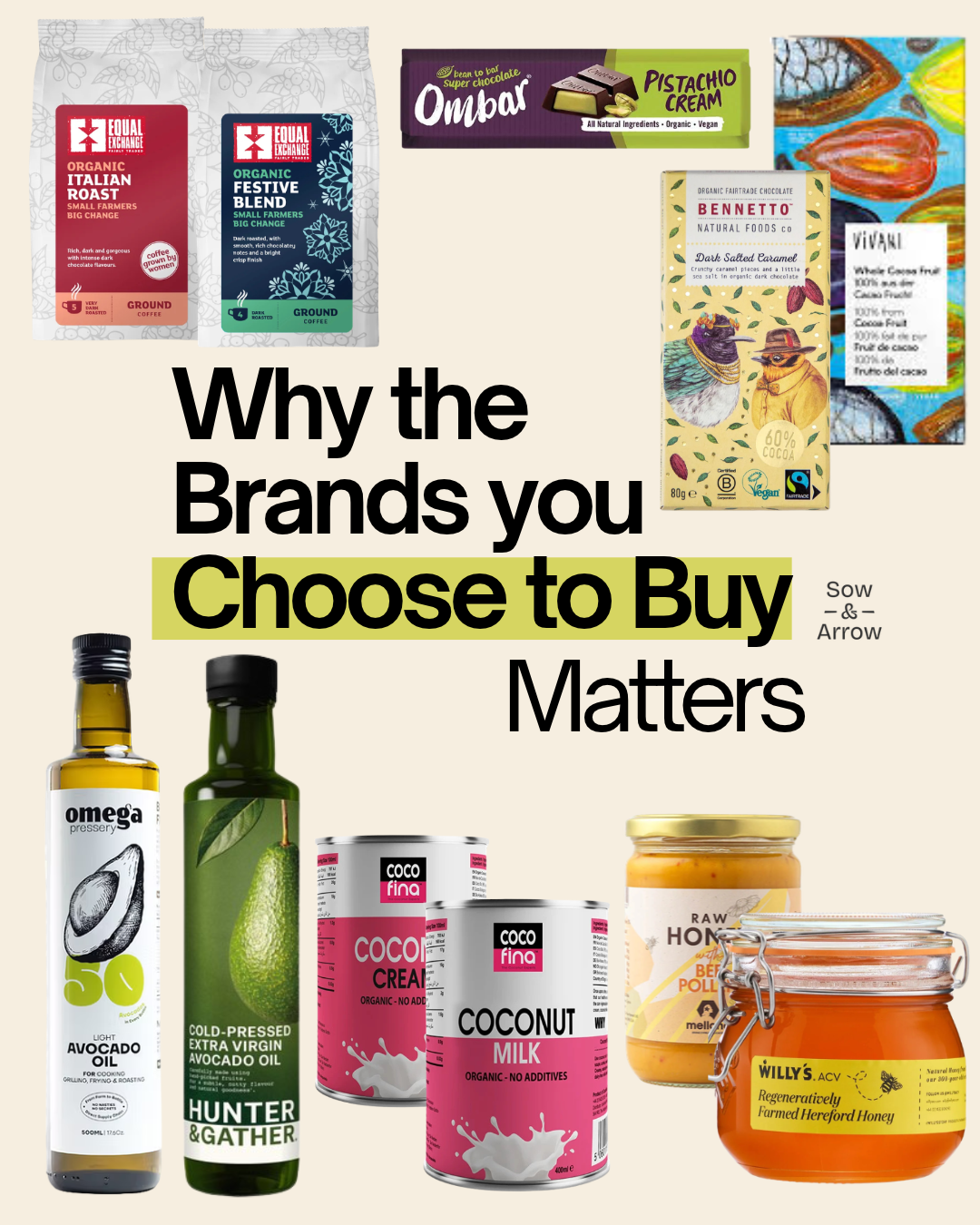
Brands such as Ombar, Bennetto and VIVANI offer sustainable, organic, high-quality chocolate that does not compromise on taste!
The key is to remember that organic doesn't automatically mean ethical. Both matter.
2. Coconut Milk: Less additives, more actual coconut
Have you ever turned over a carton of coconut milk and looked at the ingredients?
You might be surprised.
Many mainstream coconut milk products contain additional ingredients such as emulsifiers, stabilisers and thickeners. These can include polysorbates and sodium carboxymethyl cellulose.
Some products also contain surprisingly little actual coconut.
Why buy a coconut product that contains more unnecessary ingredients than it needs?
We believe simpler is often better.
Look for coconut milk made with just coconut and water, ideally organic, with a high percentage of actual coconut.
One brand worth exploring is Cocofina. Its full-fat coconut milk contains 76% coconut, while its regular coconut milk contains 46%. It also offers organic products without unnecessary gums or emulsifiers.
Beyond the ingredients, consider how the coconuts are harvested. Animal welfare is an important issue in the coconut industry, particularly the use of trained monkeys in some harvesting practices.
Cocofina states that it checks its sourcing regions and farmers to avoid monkey labour, alongside maintaining long-standing farmer relationships.
What should you look for?
- A short, recognisable ingredient list.
- High coconut content.
- Organic certification.
- No unnecessary stabilisers or emulsifiers.
- Responsible sourcing and animal-welfare commitments.
Sometimes the best product is simply the one that contains more of the ingredient you're actually buying it for.
3. Honey: Is your honey really honey?
Honey is often seen as one of nature's simplest foods. But unfortunately, not everything labelled honey is necessarily as pure as we might imagine.
Honey adulteration is a significant global issue, with some products being diluted or bulked out with cheaper sugar syrups.
A 2023 European Commission investigation found that 46% of the imported honey samples it tested were suspected of containing added sugar syrups.
This wasn't a representative survey of all honey sold in shops, but it highlights just how serious honey fraud has become.
There are also important questions around where honey comes from, how bees are managed and whether the land surrounding hives provides sufficient food and habitat throughout the year.
We particularly like producers who take a wider view of beekeeping and biodiversity.
For example, Willy's produces regeneratively farmed Herefordshire honey, with an emphasis on improving the land and providing forage for bees, including planting willow to support early-season pollen availability.
Mellona is another interesting brand, offering raw honey with bee pollen, combining traditional honey production with the natural contribution of bees.
What should you look for?
- Pure honey with no added syrups.
- Clear country-of-origin information.
- Traceable, trusted producers.
- Responsible beekeeping practices.
- Producers who actively support biodiversity and bee habitats.
Honey should be something we can trust, from the hive to the jar.
4. Avocado Oil: Look beyond the fashionable bottle
Avocado oil has become increasingly popular, but as with any growing food trend, it's worth looking at how it is produced.
Not all avocado oils are equal.
Consider where the avocados are grown, how farmers are treated, whether production contributes to food waste and how the oil is extracted.
We particularly like the idea of supporting producers who work directly with smallholder farmers and find value in fruit that might otherwise be rejected. Hunter & Gather offer cold-pressed extra virgin avocado oil and highlighting its work with farmers and efforts to reduce food waste.
What should you look for?
- 100% pure avocado oil.
- Cold-pressed extra virgin options where appropriate.
- Transparent country-of-origin information.
- Responsible farming and sourcing practices.
- Brands that support farmers and reduce food waste.
It's not just about what goes into the bottle; it's about the entire journey from farm to kitchen.
5. Coffee: The real cost of a cheap cup
For many of us, coffee is a daily ritual. But the global coffee industry has a long history of economic and environmental challenges.
Smallholder farmers produce the majority of the world's coffee, yet often receive only a small share of the final retail value.
Global commodity prices fluctuate, making it difficult for farmers to earn a reliable income. Many face debt, poverty and unpredictable harvests.
There are also serious labour concerns, including low wages, child labour and unsafe working conditions.
And the environmental impact can be considerable.
Industrial coffee farming has contributed to deforestation, habitat destruction, chemical pollution and biodiversity loss. Climate change is adding further pressure, threatening growing regions and future harvests.
Fairtrade and organic certifications can help, but no single label guarantees that every farmer is receiving a living income or that every environmental impact has been addressed.
One brand we particularly like is Equal Exchange.
Its cooperative model supports small-scale farmers, promotes organic agriculture and champions fairer trading relationships. It also works with women-led farming organisations through its Grown by Women range.
What should you look for?
- Organic coffee.
- Fairtrade or independently verified ethical sourcing.
- Direct relationships with farmer cooperatives.
- Shade-grown and biodiversity-friendly farming.
- Brands that demonstrate long-term commitments to farmer welfare.
That morning coffee can be about more than the caffeine. It can also support the people and places behind every cup.
Making better choices starts with looking closer
We don't believe that shopping sustainably means getting everything right, or that every product needs to be perfect.
But we do believe that understanding where our food comes from gives us the power to make better decisions.
Look beyond the front of the packaging. Read the ingredients. Question vague sustainability claims. Research the brands you support and look for independent certifications where possible.
Organic, ethical and sustainable are not interchangeable terms. A product can be organic but still have questionable labour practices. A brand can support farmers but still have work to do on its environmental footprint.
The more informed we become, the better choices we can make.
At Sow & Arrow, we're passionate about discovering products that put quality, transparency, ethical sourcing and environmental responsibility at the heart of what they do.
Because every purchase is a choice. Let's make those choices count.
Leave a comment
All comments are moderated before being published.
This site is protected by hCaptcha and the hCaptcha Privacy Policy and Terms of Service apply.